
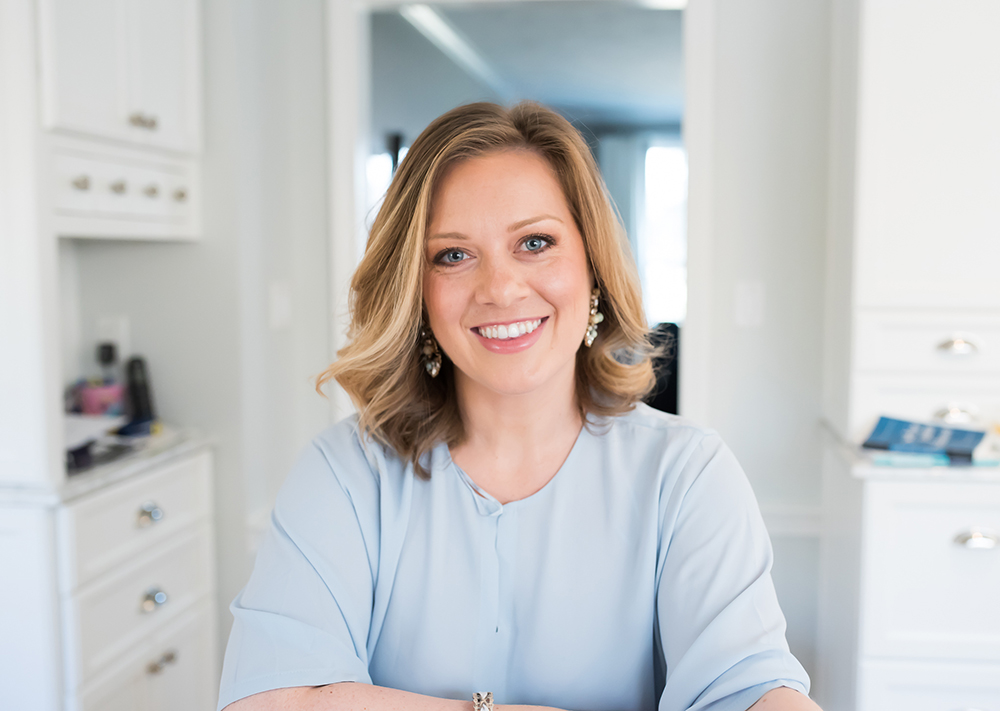
Our latest interview is one I know you’re going to love! Dr. Alex DiGrado is a North Shore native, pelvic floor physical therapist, small business owner, co-host of the Under the Hood podcast and mom of 2. Keep reading to learn why she left the traditional healthcare system to create her own practice, how she helps women in multiple phases of life, and her thoughtful insight on navigating life as a busy mom.
Where are you from originally and what town do you live in now?
Born in Nahant, raised in Peabody, now live in Malden, MA.

How many children do you have and what are their age(s)?
Two kids, ages 6 and 3.
What’s your favorite family activity on the North Shore?
Brooksby Farm, Crane Beach, Topsfield Fair, Wag n Wash (in Beverly) for our great dane. 😉
Where’s your favorite place to eat and/or shop on the North Shore?
Tonno Wakefield, Tides Restaurant & Pub in Nahant, Mission on the Bay in Swampscott, Turner’s Seafood Grill in Melrose.
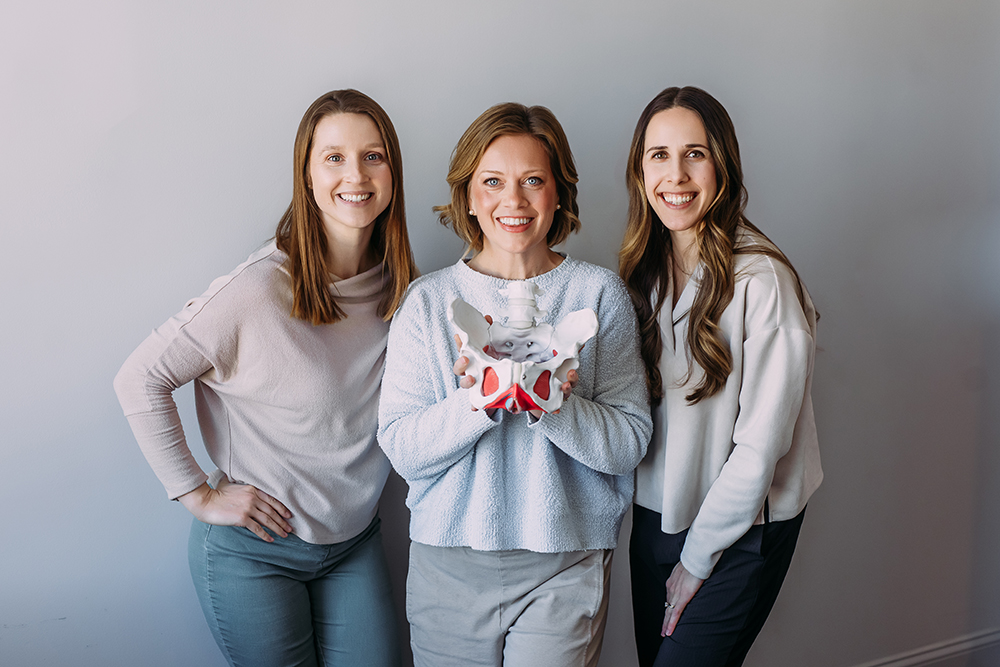
Tell us a little bit about your background and how you came to start Boston Pelvic Physical Therapy.
I started Boston Pelvic Physical Therapy because I kept seeing the same thing: people (especially women and postpartum folks) being told that things like leaking, pain with sex, pelvic pressure, or feeling disconnected from their body after having a baby or as they got older was, “normal,” and something they just had to live with…and it’s not!
I experienced this firsthand in my own postpartum recovery. Even as a trained pelvic floor PT, I still felt dismissed, confused and overwhelmed trying to navigate the ‘traditional’ system. It made me realize how many other people were probably feeling the same way, and I wanted to do something about it.
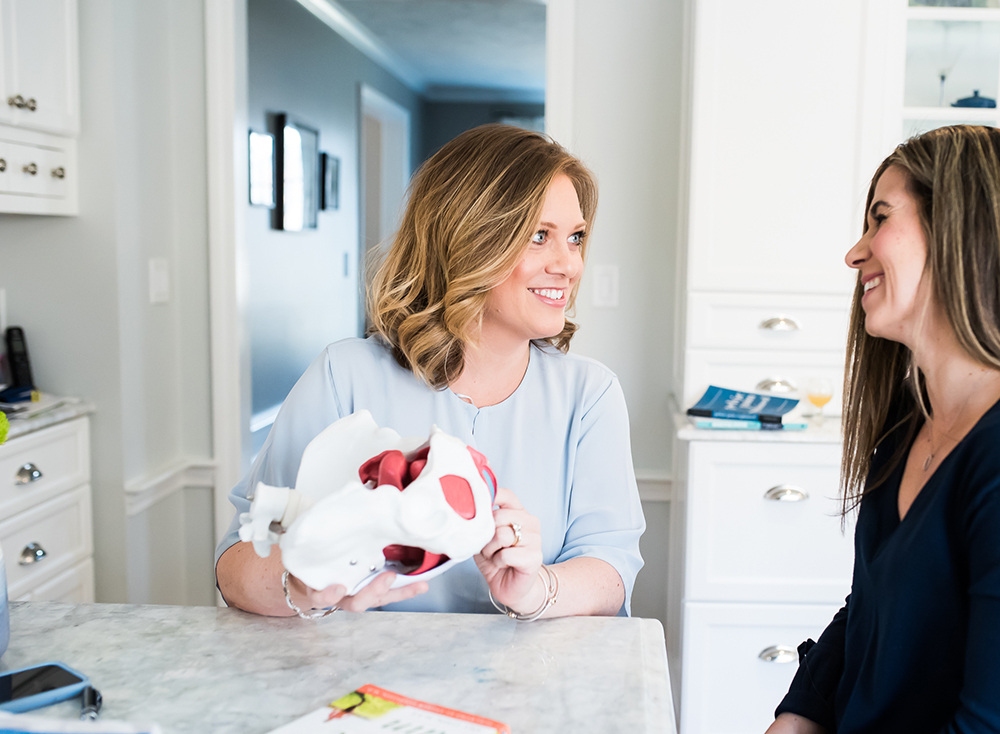
Boston Pelvic PT is a space where people feel heard, respected, informed, and treated as actual humans, not rushed through short appointments and given one-size-fits-all fixes. We take a comprehensive approach to treatment (because pelvic health is whole-body health). This combines advanced pelvic floor therapy, nervous system regulation, strength training principles, movement assessment, and ongoing education so that our patients can feel confident and connected to their bodies again. We’re deeply committed to providing trauma-informed, inclusive, affirming care, and we’re proud to support the LGBTQIA+ community.
Where is Boston Pelvic PT located?
802 Main St, Melrose, MA.
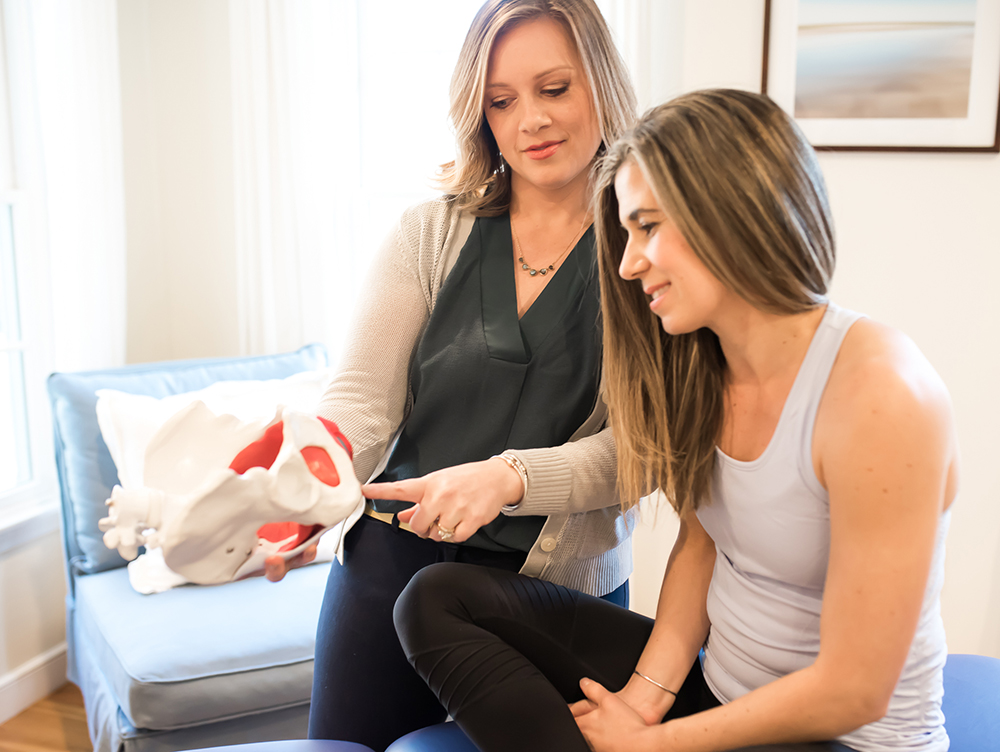
What types of services do you offer?
We work with people of all backgrounds, ages (18+), and gender identities, with much of our care focused on pregnancy, postpartum, and (peri)menopause. Some of the most common things we help with include:
- Pregnancy-related pain
- Postpartum recovery (cesarean and vaginal birth rehab)
- Pelvic, hip, back pain
- Urinary leakage and urgency
- Constipation and bowel dysfunction
- Diastasis recti (ab separation)
- Prolapse (we offer pessary fitting)
- Painful intercourse and other sexual function concerns (including difficulty with orgasm and erectile dysfunction)
- Return to exercise and strength training
- Return to running and higher-impact activity
- Fertility support
- Perimenopause and menopause-related concerns
We also want to emphasize that Pelvic floor PT isn’t just for when something starts to bother you – it can also be a smart form of prehab, maintenance, and performance optimization to help you get ahead of issues and support long-term function. So, for instance, we work with athletes who want to stay strong and perform at their best through a proactive, preventative approach to their pelvic floor health.
How early would you start working with a mom-to-be?
We can start working with patients as early as the preconception phrase…and then continue during fertility planning, throughout pregnancy, and into the postpartum period.
Preconception care focuses on supporting healthy tissue mobility, circulation, and pelvic floor function, and can be a helpful part of overall preparation for pregnancy and fertility.
During pregnancy, we support comfort, strength, and function while also providing labor and delivery preparation, including pushing strategies, partner education, birth preference planning, and guidance aimed at reducing perineal trauma risk.
Postpartum care includes recovery and rehab after both vaginal and cesarean births, with a focus on healing, restoring strength and coordination, and safely returning to exercise and daily activity.
We tailor our care to the individual at each stage, because obviously every body, birth experience, and recovery timeline is different.
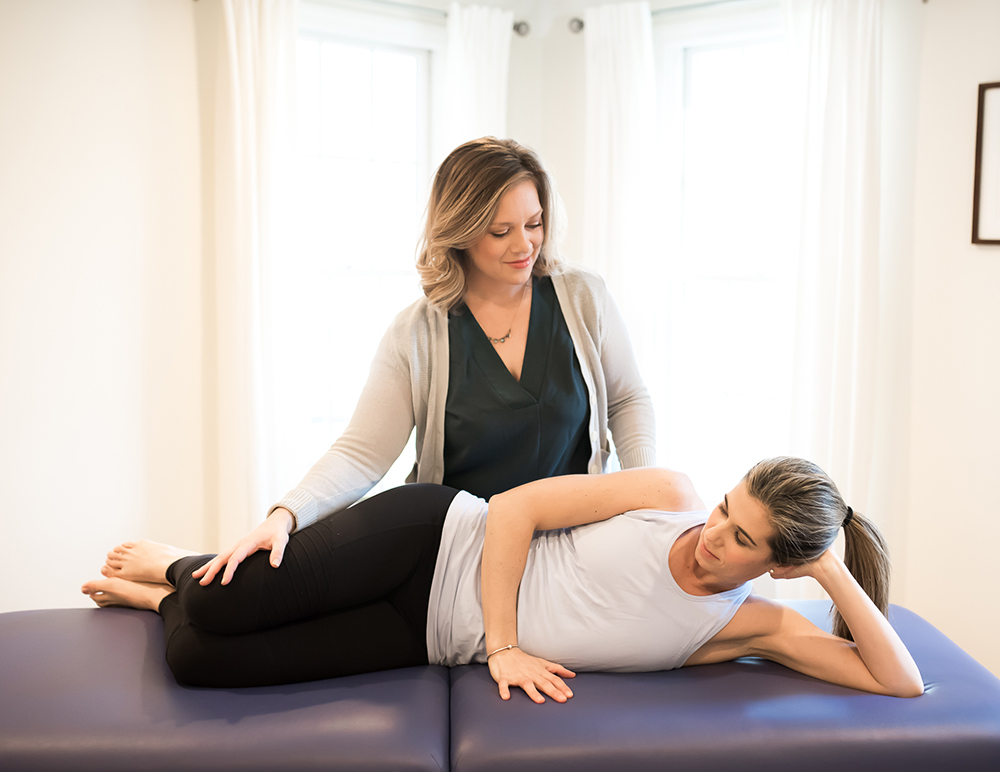
Tell us a little more about your unique Return to Running Program.
Our Return to Running Program helps people get back to running and higher-impact exercise after having a baby in a way that feels good and makes sense for their body (instead of just being told they’re, “cleared,” to exercise at their 6 week check up but not knowing where to go from there).
Yes we work with runners, but also with anyone getting back into higher-impact activities like dance, tennis, CrossFit, or any kind of movement that helps you feel like you again. We can help you whether you’re a few months or several years postpartum – it’s never too late!
We look at how your core and pelvic floor are working together, how you’re managing pressure, how your body is handling load and impact, and how you’re moving overall. We also pay attention to common postpartum symptoms like leaking, heaviness, pain, pressure, or other core changes (like diastasis recti) that a lot of people are told to just ignore or wait out.
From there, we build a clear, individualized plan (that’s realistic for your life) that includes strength work, gradual return-to-impact progressions, and education so you can feel confident getting back to the activities you love (without constantly worrying about leaks, symptoms, or making things worse).
The goal of the program isn’t just to return to running – it’s to feel strong, confident, and like yourself again when you do it.
How would moms best connect with you to set up an appointment?
You can easily schedule an appointment online HERE (and MA is a direct access state, so you don’t need a referral to come see us). If you’d prefer to speak with a member of our team first to ask questions and learn if pelvic floor PT is a good fit for you, we also offer a free 15-minute discovery call HERE. You can also call or text us at 813-540-0639 or email [email protected].
Do you accept insurance?
No – we are out-of-network with insurance, which allows us to provide one-hour 1:1 appointments and highly individualized care without the restrictions that often come with insurance-based models – I talk about this in more detail here and here. We provide superbills that patients can submit to their insurance company for potential reimbursement, depending on their plan and out-of-network benefits. We also accept HSA/FSA cards. Our rates are listed right on our website bostonpelvicpt.com
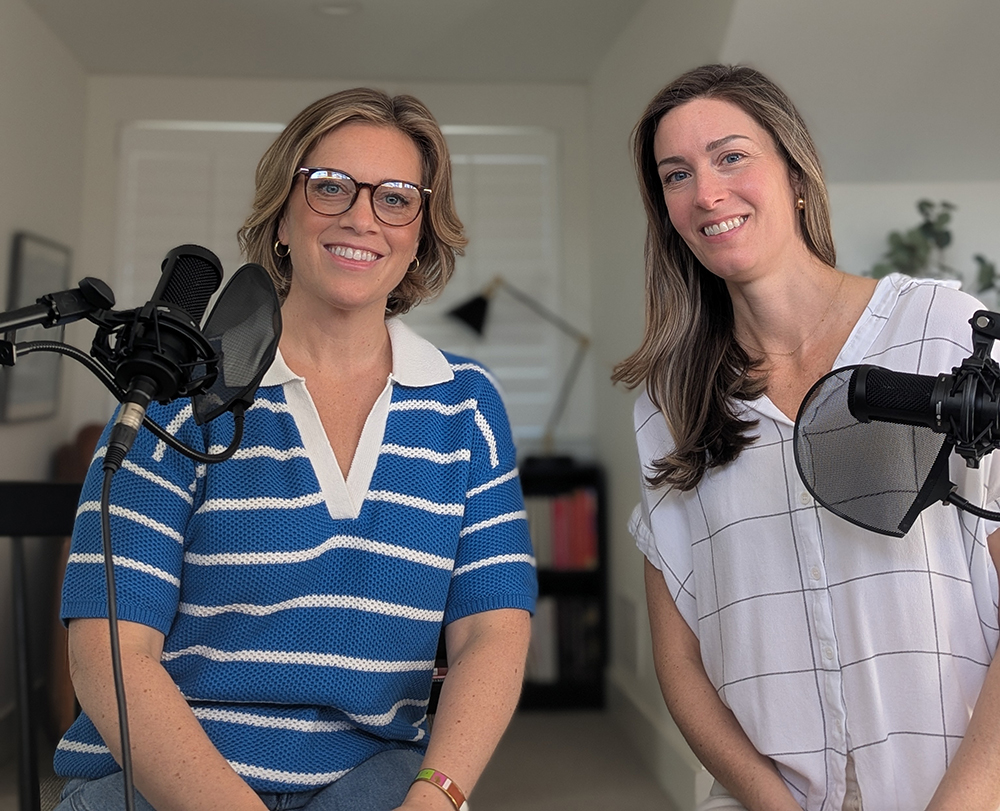
In addition to Boston Pelvic PT you co-host a podcast: Under the Hood. What are some topics you discuss on the podcast and where can moms listen?
On Under the Hood, my amazing co-host, sex therapist + couples counselor Dr. Rebecca Eudy, and I talk about all things pelvic health, sexual health, relationships and motherhood – topics that many women we know are thinking about but don’t always feel comfortable bringing up with their doctor or even their closest friends.
We say that from the clitoral hood to parenthood, nothing is off-limits. We’ve covered things like why you might leak when you run or sneeze, why sex can become painful (or your libido can disappear altogether) after a baby or as you get older, what’s behind bowel and gut health changes, and what it feels like to be dismissed in the healthcare system (and how to advocate for yourself in those moments). We also talk about relationships and resentment, couples counseling, techniques for nervous system regulation, body image, and the science of pleasure and orgasm.
We mix our decades of clinical perspective with our own personal experiences, and try to keep it honest, supportive, and practical, so listeners walk away with something they can actually use, not just more information that sounds good but doesn’t actually help in real life.
We want to make evidence-backed health information feel understandable and empowering, so women can make informed decisions about their bodies and feel less alone in whatever they’re going through. Episodes are only about 25 minutes, because we know everyone is busy. You can listen to Under the Hood on Spotify, Apple Podcasts, and most major podcast platforms, and watch the video on YouTube. We’d love to hear from you if you have suggestions for future topics, or guests we should have on! Let us know here and follow us @UndertheHoodDocs.
Any tips for balancing work & motherhood?
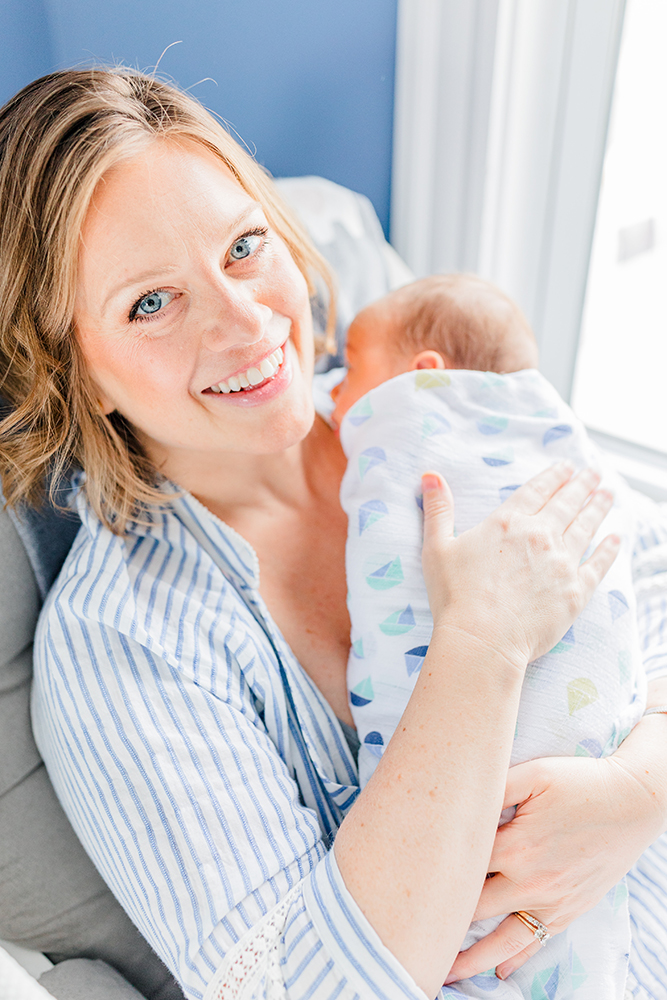
“Balance” has honestly never felt like the right word to me because most days it doesn’t feel balanced at all. Becoming a mom forced me to get really clear on my priorities and values. Part of why I left the traditional healthcare system and started my own business was because I wanted the flexibility to bring my kids to school and pick them up at 2:20 every day. Having control over my schedule mattered more to me than climbing a traditional career ladder in the same way I might have before kids.
I also think the traditional workforce is often not designed around caregiving responsibilities, and mothers still tend to absorb a disproportionate amount of logistical, emotional, and professional sacrifice. That can make the idea of “having it all” feel unrealistic or even guilt-inducing.
What has helped me most is letting go of the expectation that I can do everything equally well at the same time. Some seasons are more career-focused, some are more family-focused, and sometimes both feel messy. I try to think less about perfect balance and more about alignment—are the choices I’m making aligned with my core values, my ambitions, and the kind of presence I want to have for my children?
At the same time, I recognize there’s a huge amount of privilege and nuance in these conversations. Financial realities, childcare access, healthcare costs, career demands, and support systems all shape what options people actually have. Sometimes survival and cost of living dictate decisions more than our ideals do. A lot of mothers are simply doing the best they can within systems that make this incredibly hard.
Motherhood has also changed my definition of success. I still care deeply about my work and ambition, but I now value flexibility, autonomy, and time with my family in a way I couldn’t have predicted before falling so deeply in love with my kids.
What is the best piece of mom advice you ever received?
“Everything is a phase – the phases you love and the ones you don’t.” And “If you have a kid who hates math and loves tennis, get them a tennis coach, not a math tutor.” This advice is how I chose pelvic floor PT because I leaned into my strengths and gift of being comfortable with intimate conversations and helping people feel less shame and stigma around vulnerable personal topics.
What’s your favorite thing to do when you need some “me” time?
I love doing Pilates (shout out to my amazing long-time instructor Mia Melendez at the Melrose Y), yoga nidra (if you haven’t done a Rest Circle with Ali Schmitt yet – you need to try it out!), being at the ocean, and reading.
Learn more about Boston Pelvic PT at www.bostonpelvicpt.com or connect with them on Instagram at @bostonpelvicpt. You can also find more on the Under the Hood Podcast on Instagram @underthehooddocs.
…
This post is sponsored by Boston Pelvic PT but all opinions present are my own.